



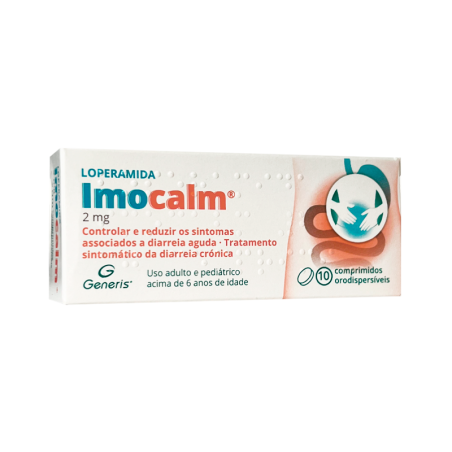
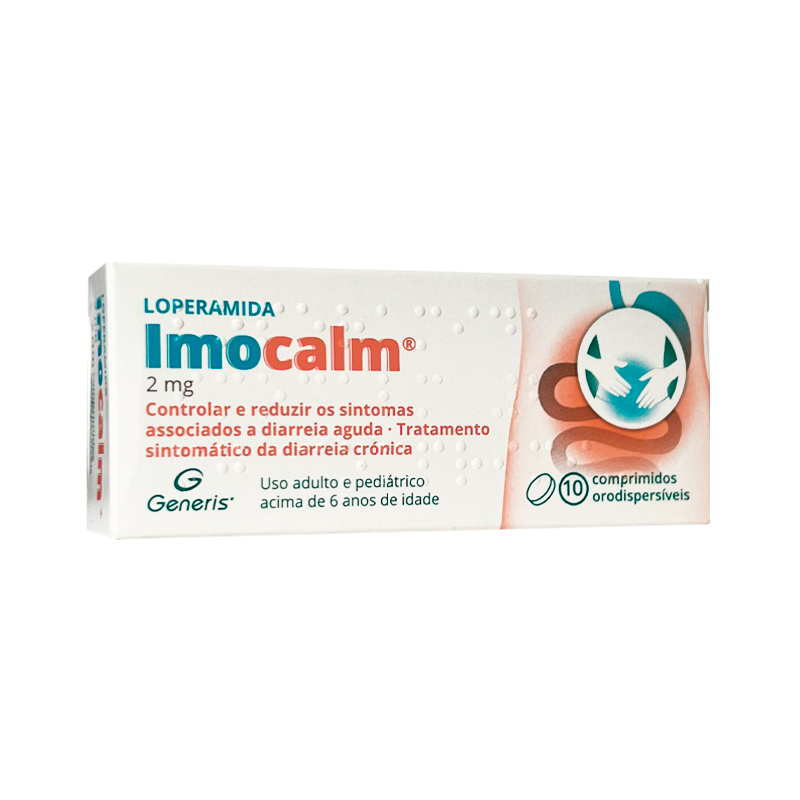
Imocalm Loperamida 2mg is indicated for the symptomatic treatment of acute and chronic diarrhea.
Active substances: 2mg of loperamide hydrochloride.
Loperamide binds to opioid receptors in the intestinal wall. Consequently, it inhibits the release of acetylcholine and prostaglandins, and thus reduces propulsive peristalsis, increasing intestinal transit time. Loperamide increases the tone of the anal sphincter, reducing incontinence. Due to its high affinity for the intestinal wall and considerable first-pass metabolism, loperamide practically does not reach the systemic circulation.
Dosage and method of administration:
Adults and children over 6 years of age: Acute diarrhea: the initial dose is 2 tablets for adults and 1 tablet for children, followed by 1 tablet after each diarrheal bowel movement. Chronic diarrhea: the initial dose is 2 tablets per day for adults and 1 tablet per day for children, this dose must be adapted until 1-2 solid stools per day are obtained, which is generally possible with a dose of maintenance of 1 to 6 tablets per day. The maximum dose for acute and chronic diarrhea is 8 tablets per day, for adults, in children the maximum daily dose should be related to weight (3 tablets/20 kg). Orodispersible tablets must be placed on the tongue. The tablet dissolves and is then swallowed with saliva. It is not necessary to drink any liquid to take it.
Contraindications:
Hypersensitivity to the active substance or to any of the excipients. It should not be administered as primary treatment in patients with acute dysentery, which is characterized by high fever and blood in the stool, in patients with acute ulcerative colitis, in patients with bacterial enterocolitis caused by invasive microorganisms including Salmonella, Shigella and Campylobacter, in patients with pseudomembranous colitis associated with the use of broad-spectrum antibiotics. In general, it should not be administered when it is necessary to avoid inhibition of peristalsis due to the possible risk of significant sequelae including ileus, megacolon and toxic megacolon. It should be stopped quickly when constipation, abdominal distension or ileus develop.
If you have any doubts or symptoms persist, consult your doctor or pharmacist.
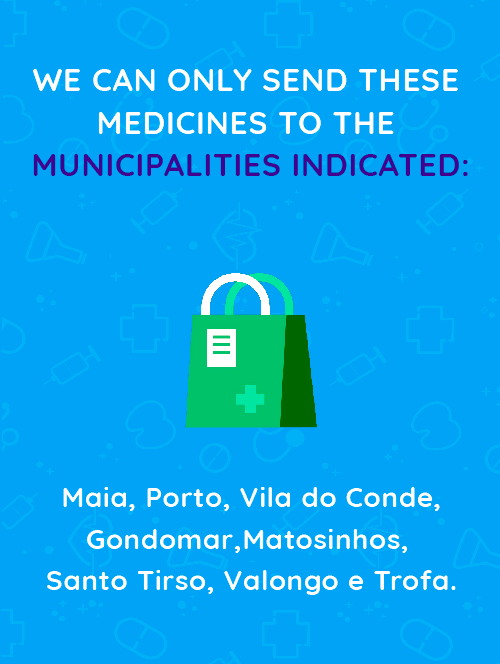
According to current legislation, medicines not subject to a medical prescription, in Portugal, can only be delivered in the municipalities of Maia, Gondomar, Matosinhos, Porto, Santo Tirso, Trofa, Valongo and Vila do Conde. This limitation does not apply to shipments to other Member States of the European Union.
check_circle
check_circle

error Your review appreciation cannot be sent
feedback Report comment
check_circle Report sent
error Your report cannot be sent
Write your review
check_circle Review sent
error Your review cannot be sent